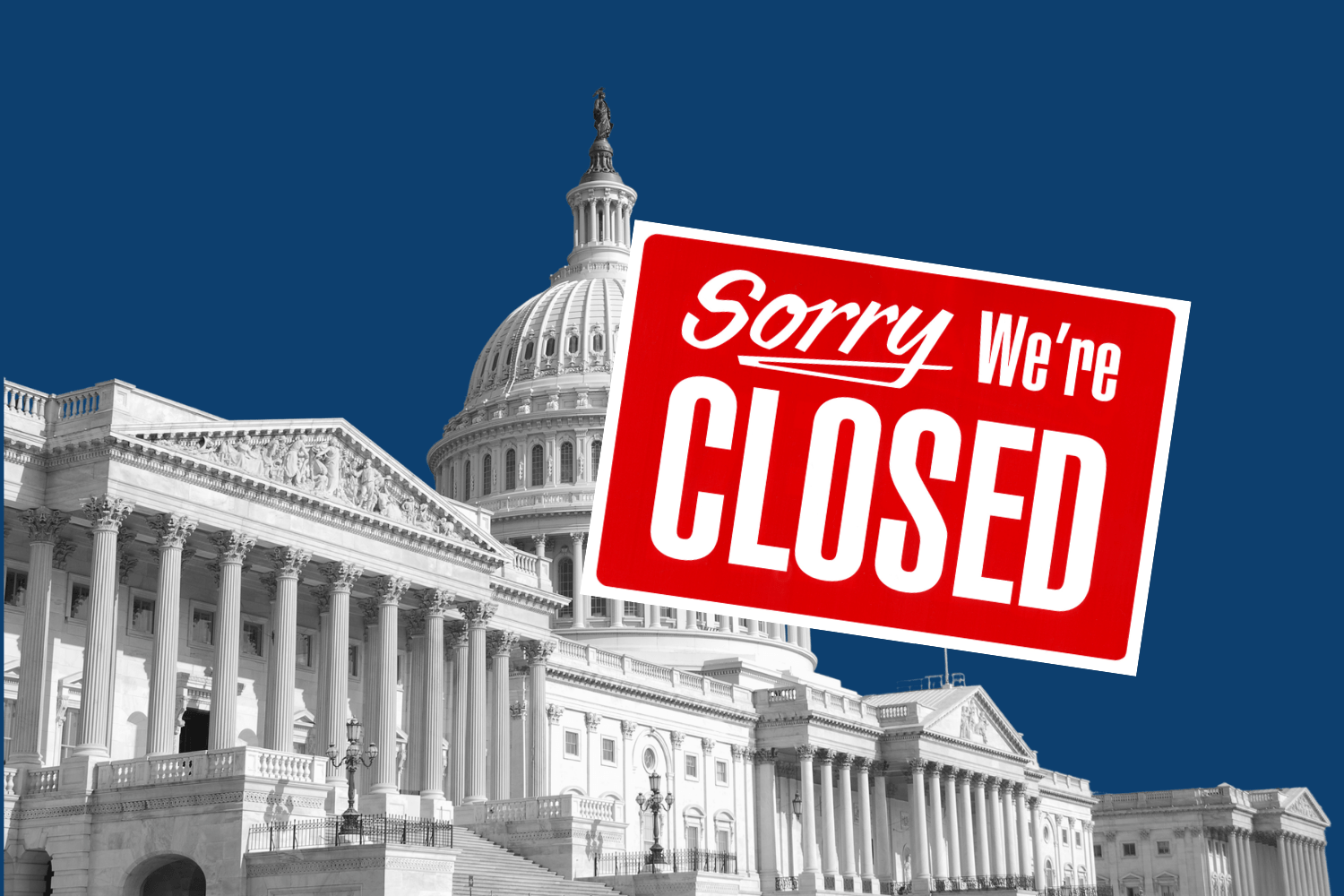
Each year, Congress is in charge of creating a financial plan, or a budget, that lays out the funding for many government agencies and programs. This budget is approved by both arms of Congress, then forwarded to the President to be signed and enacted into law. The House of Representatives and the Senate have been debating leading up to last night’s deadline of September 30th. Without coming to a resolution by this deadline, this means our federal government has officially “shut down.” What does this mean?
First, some background info…who represents you in Congress?
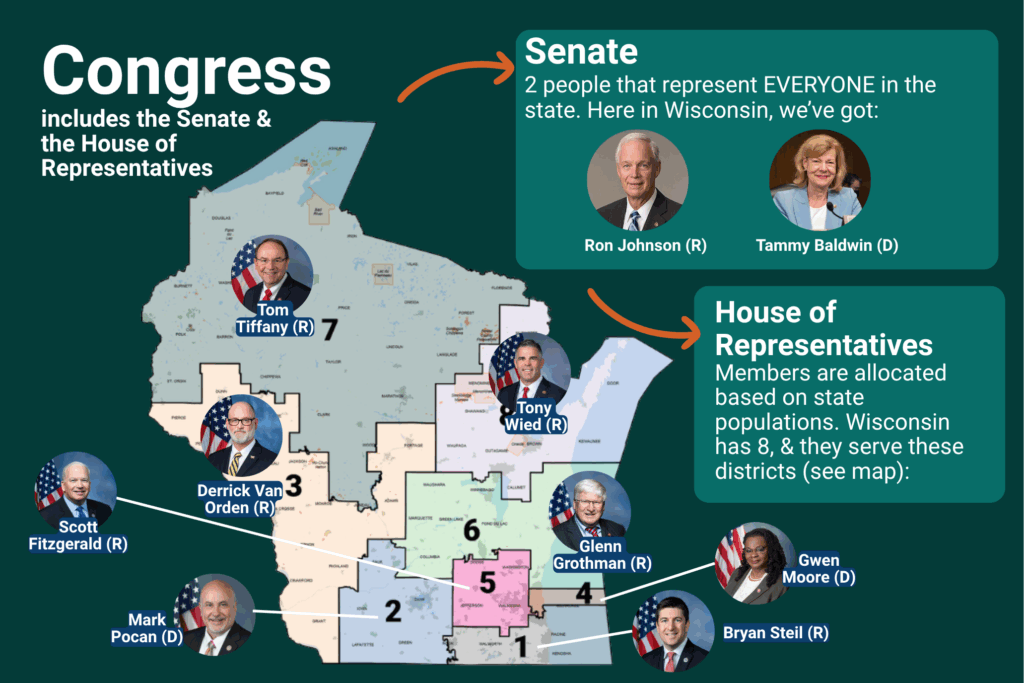
Plug in your address here to find your legislators 👉
As the legislative branch, it’s Congress’ job to create federal laws, oversee the executive branch (currently the Trump administration), and provide funding for government functions.
There has been an attempt by the House of Representatives to implement a short term funding plan that would sustain the federal government through November, but this was rejected by the Senate.
What happens when the government shuts down?
Since Congress has failed to pass a federal spending bill and the current agreement has expired, the government must shut down. In this scenario, federal agencies must stop all “non-essential” discretionary functions until new funding legislation is both passed by Congress and signed by the President.
What is considered essential vs. non-essential government functions?
In the past, this was determined by federal agencies and Presidential administration, and there’s quite a bit of wiggle room about what they can consider essential or non-essential. These agencies include Social Security, Health and Human Services, which oversee programs like Medicare and Medicaid, National Parks, the IRS, and the US Department of Agriculture, which oversees SNAP (aka FoodShare in WI). However, the Trump administration has been pushing the boundaries of its power since taking office in early 2025. This leaves even more room for confusion and uncertainty, as we’re already seeing federal programs such as SNAP and Medicaid gutted.
In short, there is no definitive answer to this question. In past shutdowns, businesses continued as normal, but money isn’t allocated until a budget has been agreed upon. This isn’t to say that the lack of funding doesn’t present its own issues; services may see delays and other administrative difficulties may arise in the meantime. A TSA agent, for example, may show up to work, but they won’t be paid until after a budget is signed.
Why haven’t I heard about this until now?
While news of the government shutdown is still fresh, the House and the Senate have been going back and forth for months leading up to the September 30th deadline. Much of the legislative process, including the budget process, is overcomplicated to the general public. It’s our goal at Kids Forward to make these processes accessible to every Wisconsinite. With so much going on in the world, it’s easy to lose track of the mundane, day-to-day processes happening in the capitol. When we are unaware of what’s going on, it’s much easier for elected officials to avoid accountability and pass unpopular legislation or get little done.
How long will this last?
There’s no telling how long this could last. There have been shutdowns that go on for only hours, and the longest one (2018-2019) lasted 35 days. The gap in funding will last as long as it takes for Congress to come to agreement on a spending bill, and for the President to sign off on said deal.
Should I be afraid of the government shutting down?
The government has shut down before, and it will shut down again. In fact, the federal government has shut down a total of 20 times before today. The most recent shutdown was from late 2018 to early 2019, also under the Trump administration. While a government shutdown is preventable and should be avoided, this has not impacted local police departments, schools, or other state and locally funded services in the past. Given that this administration has already dismantled many federally-funded services and fired thousands of federal workers, unease is justified and understandable.
Why is the Government shutting down, and what’s at risk?
The Government is shutting down because Congress cannot come to an agreement on how the federal dollars should be spent by the September 30th deadline. They were late on getting these negotiations started because they were busy fighting over the deeply harmful megabill, which will take health coverage and food assistance away from millions of people. There are two critical issues we urge our Congress members to address as a part of any budget deal:
- extend the financial help people receive from the Affordable Care Act to make health care more accessible. Without this help, millions of Americans will lose their health care and see their health costs rise substantially; and
- ensure bipartisan funding agreements are adhered to, and not illegally withheld by this Administration.
The Trump administration has made it clear that they are willing to hold back funds that Congress already committed to medical research, education, energy assistance, and foreign aid. Holding back funds, aka “pocket rescissions” or “impoundment”, is illegal.
What’s next?
Kids Forward will continue to share insights, tools, and resources to help you understand the federal landscape and take action.