June 8, 2026
Contact: Emily Miota, 262-853-6863, [email protected]
New Rankings and Data Tell the Story of Which Wisconsin Kids are Too Far from Opportunity
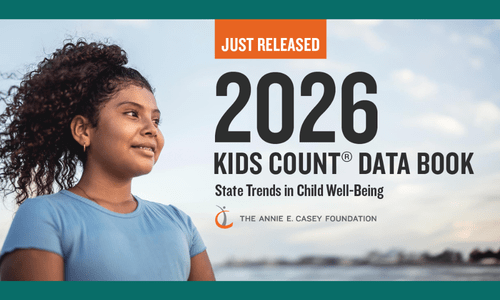
Madison, WI — The affordability crisis isn’t the only thing holding Wisconsin families back; racial inequities are preventing too many children from getting a fair shot. This is according to data supporting the 2026 KIDS COUNT® Data Book, a 50-state report of child well-being indicators developed by the Annie E. Casey Foundation.
For the first time this year, states receive a comprehensive score (from 0 to 1,000) in the Data Book, not just a ranking. The scores track 16 indicators over a five-year period from 2019 to 2024. The new scoring system shows whether policies and public investment are actually improving children’s lives, not merely how states compare to each other. While Wisconsin received a score of 692 and ranks 8th best overall, these numbers alone can be deceiving. Despite consistently ranking near the top nationally on many child well-being indicators, Wisconsin continues to have some of the deepest racial disparities in the country.
“Wisconsin is like a broken record with its legacy of failing Black children. Our state has been recognized for years as one of ‘The worst places for Black families to live’ – when is Wisconsin going to make the necessary investments to write a new headline?” shared Alia Stevenson, Deputy Director for Kids Forward.
Notably, Wisconsin continues to lead the nation in Black/white racial disparities for children living in high poverty areas (28% of Black children versus 1% of white children). Black children in Wisconsin remain far more likely than white children to grow up in neighborhoods where generations of disinvestment, housing segregation, and barriers to economic opportunity limit access to safe housing, quality schools, health care, and family-supporting jobs.
“When we underinvest in communities, we make it harder for families to afford the basics,” said Faith Roska, Youth Policy Advocacy Coach at Kids Forward. “But when we come together, reject division, and demand a system that works for all of us, every child can have the basic supports they need to thrive.”
Additionally, Wisconsin’s racial disparity between Black and white students graduating on time was the largest among all states with available data (28% of Black children versus 5% of white children). In Wisconsin, school funding disparities mean students can have very different educational opportunities just a few miles apart. Milwaukee Public Schools, which serves more low-income students and students of color with a lower property tax base, receives about $13,000 per student, compared to roughly $20,000 per student in the wealthier, majority-white Whitefish Bay district only 3 miles away. While Whitefish Bay has a graduation rate of 98%, Milwaukee Public Schools has recently reached a record-high graduation rate of 71%.
“It’s devastating to watch data releases year after year that so clearly display the way we’re not meeting the moment for our kids. K-12 education is a fundamental launching pad for our youth, and disparities that are this large, this consistent, cannot be ignored,” said Faith Roska, Youth Policy Advocacy Coach at Kids Forward.
State decision makers can start to address Wisconsin’s disparities and the affordability crisis by asking the wealthy few to pay their fair share so we can invest in things like:
- Care that works: Health care at a price all Wisconsin residents can afford, and child care at no more than 5% of a family’s income.
- Work that pays: A living wage starting at $20/hr that goes up as cost of living increases, and expanding tax credits that help working families make ends meet.
- Communities that care: Age appropriate support for youth, instead of new youth prisons, and healthy school meals for all kids and nutritious food families can afford.
In its 37th year of publication, the KIDS COUNT® Data Book provides reliable statewide numbers to help leaders see where progress is being made, where greater support is needed, and which strategies are making a difference.
###
Release Information
The 2026 KIDS COUNT Data Book will be available at www.aecf.org/databook. Journalists interested in creating maps, graphs and rankings in stories about the Data Book can use the KIDS COUNT Data Center at datacenter.aecf.org.
About the Annie E. Casey Foundation
The Annie E. Casey Foundation creates a brighter future for the nation’s young people by developing solutions to strengthen families, build paths to economic opportunity and transform struggling communities into safer and healthier places to live, work and grow. For more information, visit www.aecf.org. KIDS COUNT is a registered trademark of the Annie E. Casey Foundation.
About the Kids Forward
Kids Forward inspires action and promotes access to opportunity for every kid, every family, and every community in Wisconsin, notably children and families of color and those furthest from opportunity. We envision a Wisconsin where every child thrives.